Pediatric Liver Transplant Health Advocate Role
Background and Challenge
Pediatric liver transplant outcomes continue to be shaped by racial and socioeconomic disparities, leaving many families without equitable care. Health Advocates (HAs)—non-clinical team members connecting patients to medical and social resources—have the potential to reduce these gaps, but what exactly would this role look like in practice?
Our team partnered with Dr. Wadhwani to explore this question. Using human-centered design, we engaged caregivers and transplant practitioners to uncover needs, identify challenges, and shape a Health Advocate intervention tailored to support families post-transplant.
Co-Creating Solutions with Caregivers and Transplant Practitioners
Before conducting workshops, we reviewed qualitative interview transcripts from the research team and spoke with a pilot HA to extract key insights and define focus areas.
We ran three participatory workshops with caregivers from across the U.S., combining brainstorming, role-play, and sorting and ranking exercises to surface priorities. A workshop with transplant practitioners helped validate caregiver insights, address practical concerns, and ensure alignment with clinical realities.

Participatory workshop with caregivers

Participatory workshop with transplant practioners
With multiple inputs and often conflicting information, the caregiver becomes the steady advocate and guide.
It’s life or death. Compartmentalizing and doing what's front and center is how caregivers get through it.
Care becomes the family priority.
The child’s engagement is crucial, as they’ll be managing this for life.
Themes from Caregivers
Quotes from the Care Team
“We’re always constantly looking for financial resources for families. I think we do our best to explain the financial impact that taking time off of work may have on families, but sometimes, I don’t know that people truly realize the impact of missing work, of childcare... Having, potentially, a navigator talk about specific resources or maybe knowing their area a little bit better.”
“I think another thing that happens is like the most comprehensive assessment that families have is during their transplant evaluation. The families are in crisis at that moment. So, like you’re getting told about your kid needing a liver transplant. This is like not the time of like, ‘Yes, and I think my landlord is charging me too much for whatever.’”
Visualizing the Health Advocate’s Impact
From these sessions, I synthesized design principles that guided the intervention. I created five storyboard scenarios illustrating where a Health Advocate could have the greatest impact: connecting families to resources, managing appointments, communicating with schools, providing support and counseling, and bridging cultural differences. Storyboards were shared back with caregivers and practitioners to gather feedback and refine the scenarios further.
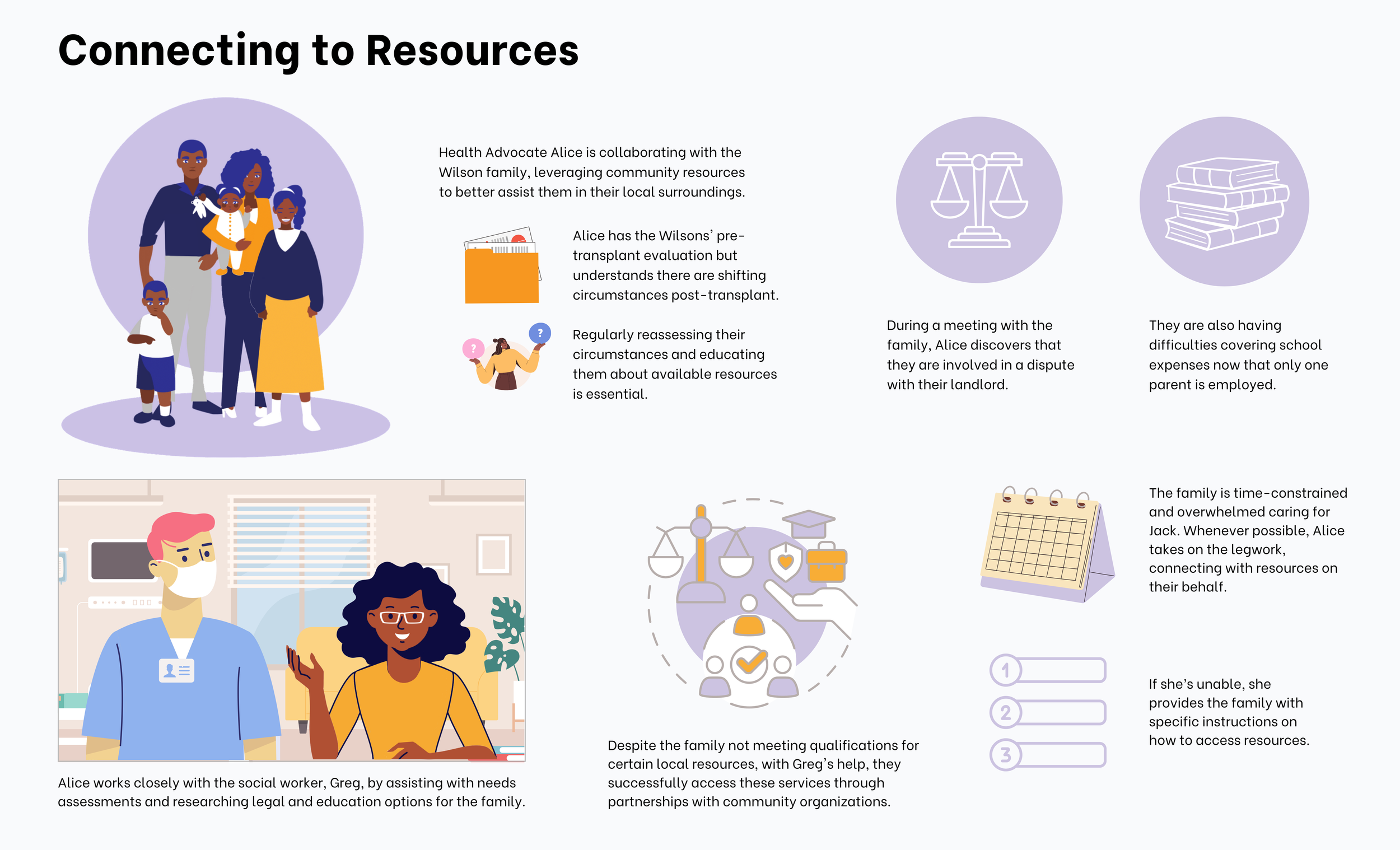
Connecting to Resources
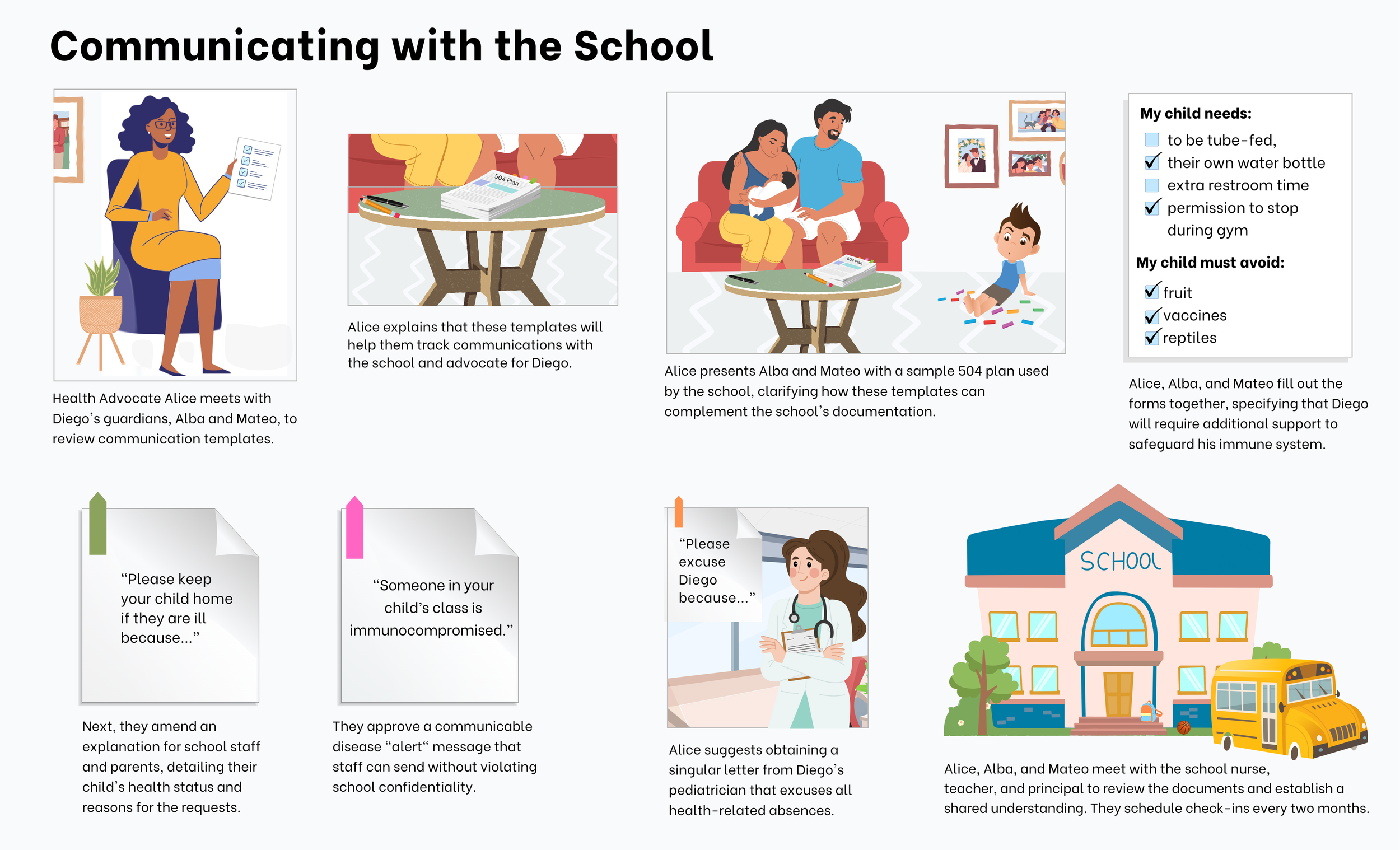
Communicating with the School
Mapping How the Intervention Works
Our service map illustrates how the intervention aids families and directs the Health Advocate’s role with concrete actions.
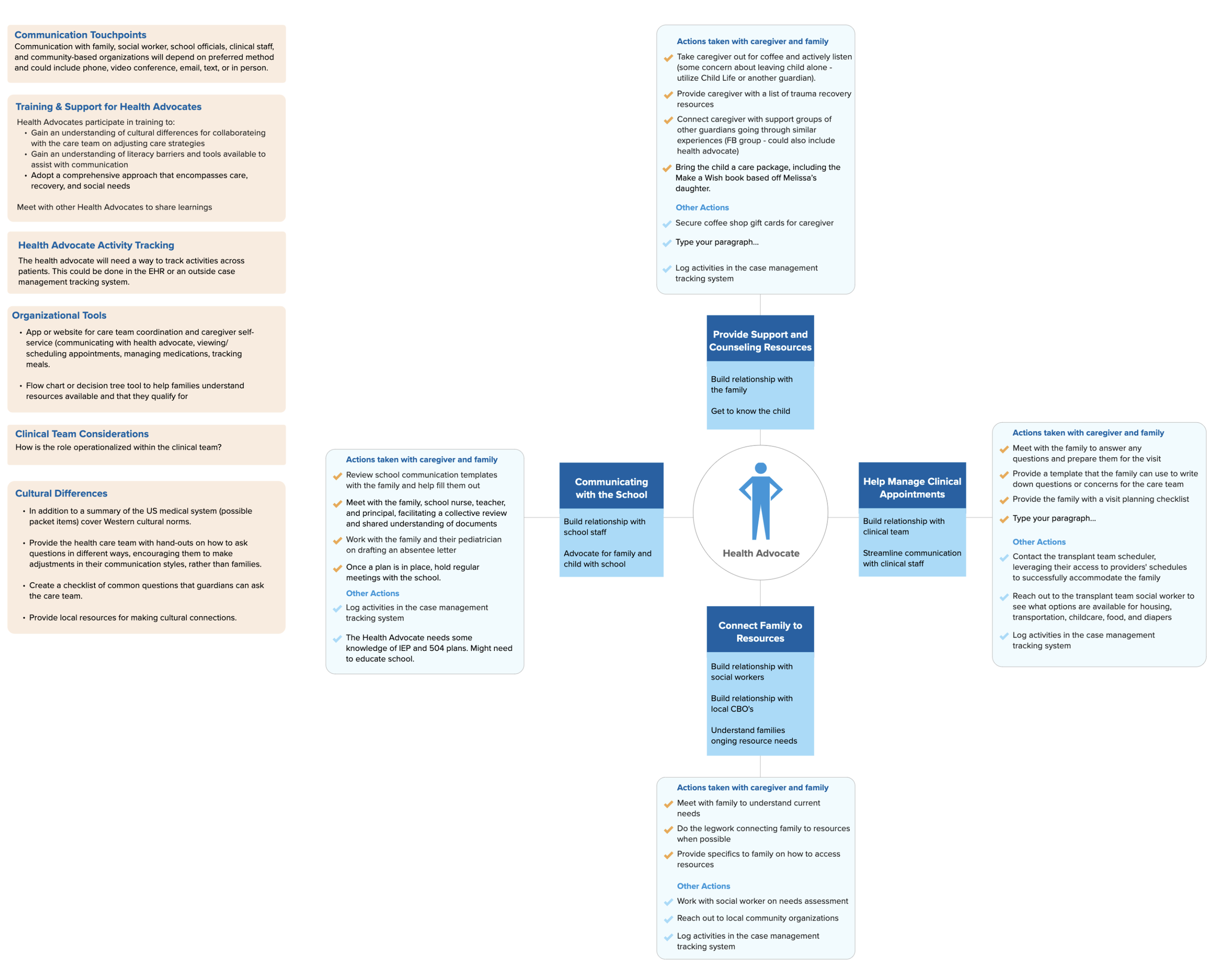
Supporting Health Advocates in Action
Building on insights from the service map, I worked with Dr. Wadhwani’s team to develop a Health Advocate Toolkit, equipping HAs with practical guidance to carry out their roles effectively and consistently.
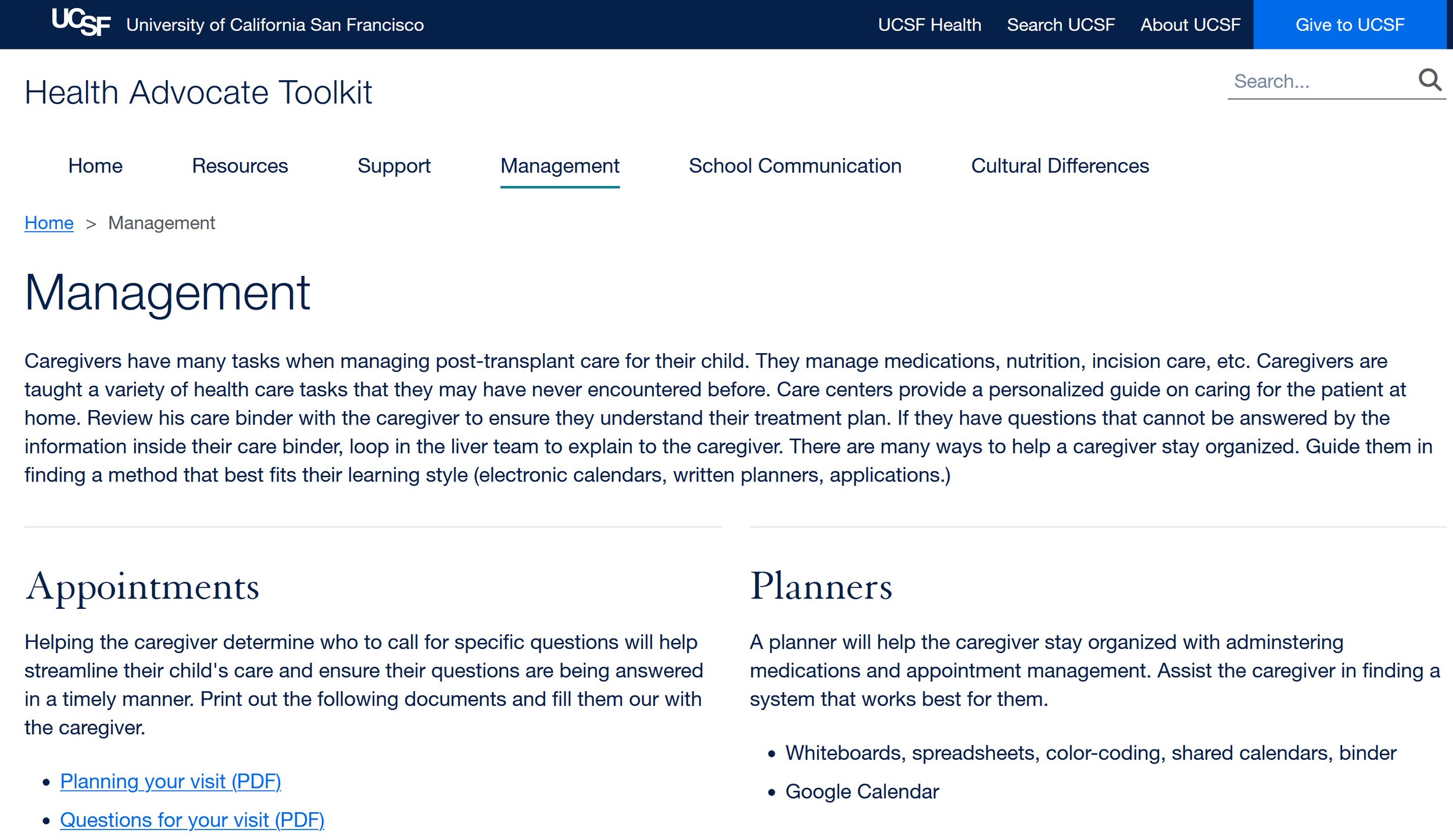
My Work
Collaborated with stakeholders to define problems and set priorities
Facilitated workshops with caregivers and transplant practitioners
Conducted semi-structured interviews with post-transplant teens and pilot HA
Reviewed care giver interview transcripts
Synthesized research findings into key themes
Created service map
Designed visuals and content for five storyboards
Developed initial HA Toolkit with pilot HA
Contributed to publication
Outcomes and Impact
Through structured design methodology, we created a prototype navigator role for pediatric liver transplant care teams. Pilot testing the Health Advocate intervention and resource website will assess their effect on post-transplant outcomes. Shaped by caregivers and practitioners, this study lays the groundwork for broader implementation across U.S. transplant centers—ensuring the solutions continue to evolve with real user needs.